Cart
0

How to Buy an Authentic Moroccan Rug: 10-Point Checklist
An authentic Moroccan rug can last for decades, but machine-made copies flood the market. Photos rarely show the difference. Amazigh (Berber) weavers in the Atlas Mountains hand-knot or hand-weave each piece from natural wool, and that work leaves clear signs you can check. This checklist gives you ten of them. Run through all ten before you pay.
1. Confirm the Material Is Natural Wool
Most traditional Moroccan rugs use sheep wool. Some Boujaad pieces mix wool with cotton or recycled fabric strips, and that is normal. Synthetic fibers like polyester or polypropylene are not. Wool feels warm, slightly springy, and a little uneven. Synthetics feel slick and uniform.
Ask the seller to confirm the fiber content in writing. A loose fiber from the back or fringe gives you a quick test: wool smells like burnt hair and turns to ash, while synthetics melt into hard beads. Only run this test with the seller’s permission.
2. Flip the Rug Over
The back tells the truth. On a handmade rug, the pattern shows clearly on the reverse, and you can see individual knots or woven wefts. Machine-made rugs often have a glued or stitched backing cloth that hides the construction. If the seller won’t let you check the back, walk away.
3. Look for Small Irregularities
Perfect symmetry is a warning sign. Weavers work from memory and intuition, not from a printed pattern. Expect lines that drift, diamonds of slightly different sizes, and color shifts known as abrash. Flaws like these show a human hand. Machines don’t make them.
4. Inspect the Knots and Weave
Part the pile on a knotted rug and look at the base. Hand-knotted rugs show individual knots of uneven spacing. Flatweaves such as Zanafi and Taznakht show interlocked wefts with a slightly bumpy texture. Pull gently at a few fibers. Strong, tight construction resists. Loose, fraying construction signals poor quality.
5. Test the Dyes
Natural dyes from plants and minerals, such as indigo, henna, and madder, create soft, layered tones. Cheap chemical dyes look flat and overly bright. Press a damp white cloth against a small colored area. Heavy color transfer means unstable dye. Slight transfer can happen with natural dyes, so judge the overall pattern, not one wipe.
6. Match the Style to Its Region
Each Moroccan rug type comes from a specific area with its own look:
-
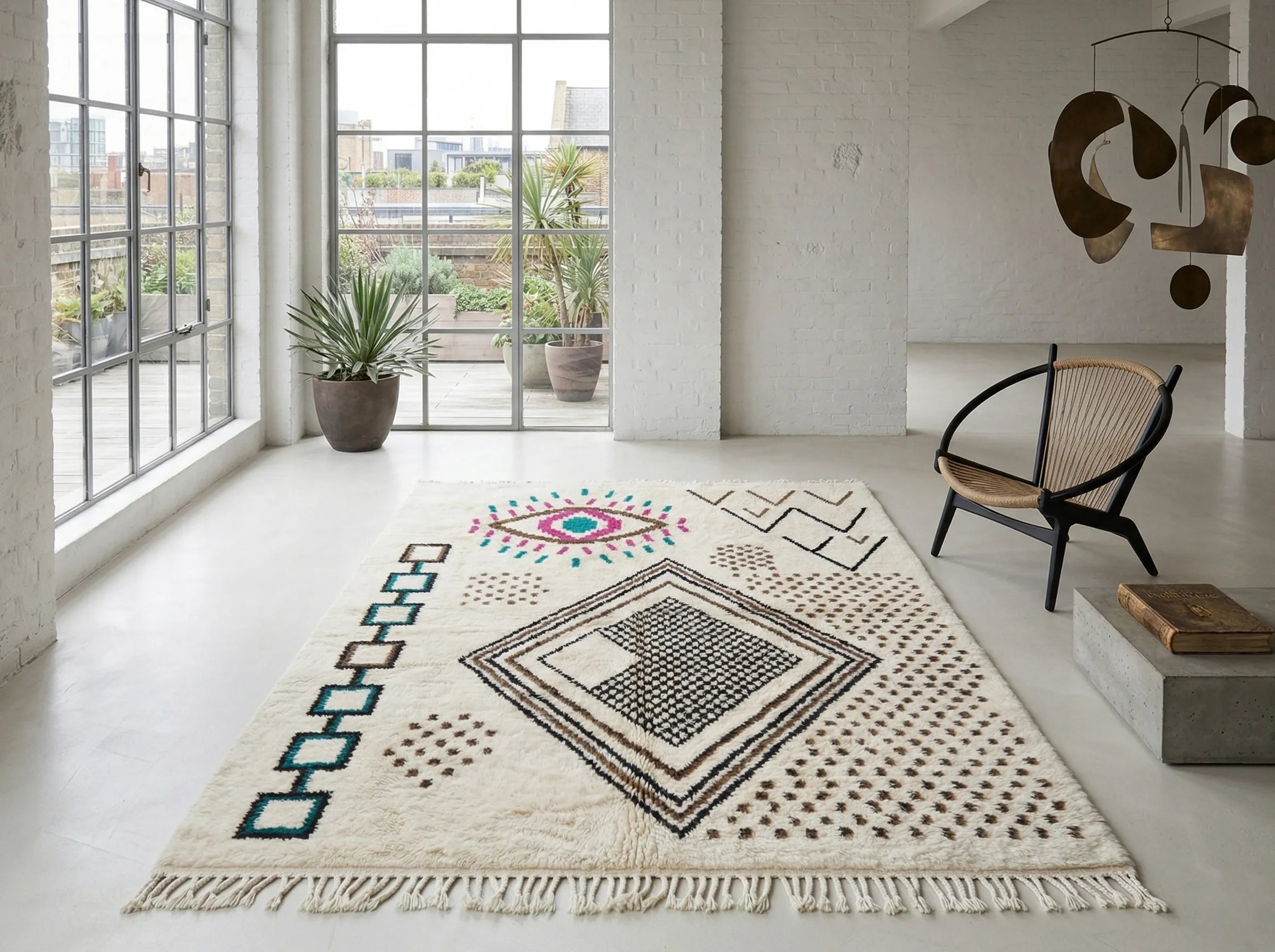
Beni Ourain: Middle Atlas, ivory ground with dark diamond lines
-
Beni Mguild: Middle Atlas, cream base with bold color accents
-
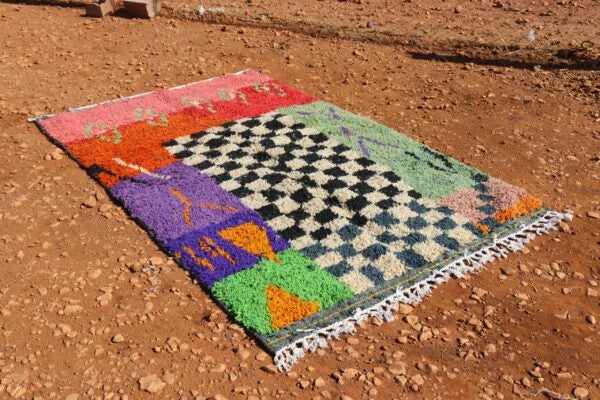
Boujaad: central Morocco, vivid pinks and oranges, abstract shapes
-
Taznakht: Anti-Atlas, sharp geometric patterns, flat or low pile
-
Glaoui: High Atlas, dense pile, deep reds and tribal geometry
A seller who labels a bright red, short-pile rug “Beni Ourain” either doesn’t know the craft or hopes you don’t. Learn the basics first.
7. Check the Fringe
Real fringe forms part of the rug. It is the loose warp threads extending past the weave. Sewn-on fringe, attached afterward, can signal a machine-made rug or a repaired piece. Look at where the fringe meets the rug body. The threads should run straight into the weave.
8. Ask the Seller Direct Questions
A trustworthy seller answers without hesitation. Ask these:
-
Where was this rug woven, and by whom?
-
What is the fiber content?
-
Are the dyes natural or synthetic?
-
Is it hand-knotted or flatwoven?
-
What is your return policy?
Vague answers like “it’s traditional” tell you nothing. Specific answers that name a region, a cooperative, or a weaving method tell you a lot.
9. Judge the Price Honestly
Hand-weaving takes weeks or months of skilled labor. A very low price for a large wool rug rarely adds up. That doesn’t mean the most expensive rug wins. Compare similar pieces by size, pile depth, wool quality, and age before you decide. Price should reflect labor and material, not just a “vintage” label.
10. Check Condition, Care, and Returns
Look for moth damage, stains, dry rot, or uneven wear. Smell the rug, too. A strong musty odor points to damp storage. Reputable sellers offer clear photos, honest condition notes, and a return window. Keep every receipt and description in case you need to dispute a claim.
Where to Shop With Confidence
Buy from a seller who shows the back, names the region, and explains the weave. You can browse handmade styles and compare details at MusMus Rugs before you decide.
Frequently Asked Questions
How can I tell if a Moroccan rug is handmade?
Check the back. Handmade rugs show visible knots or wefts and small irregularities in the pattern. Machine-made rugs look perfectly even and often have a stitched or glued backing.
Are Moroccan rugs made of wool?
Most traditional Moroccan rugs use sheep wool. Some styles, such as Boujaad, blend wool with cotton or recycled fabric. Synthetic fibers signal a non-traditional or machine-made piece.
How much should an authentic Moroccan rug cost?
Price depends on size, pile depth, wool quality, age, and weave type. Compare several similar rugs from different sellers. An extremely low price for a large wool rug usually signals a problem.
What is the difference between Beni Ourain and Beni Mguild rugs?
Both come from the Middle Atlas. Beni Ourain rugs stay mostly ivory with dark lines, while Beni Mguild rugs add colors like orange, pink, and red.
How do I care for a Moroccan wool rug?
Shake it out, vacuum on a low setting without a beater bar, and blot spills with mild soap and water. Avoid soaking the wool, and let the rug air dry flat.