Two names come up constantly in the world of authentic Moroccan rugs. Beni Ourain. Azilal. Both originate from the Atlas Mountains of Morocco. Both carry genuine Berber tribal heritage. Both attract serious collectors and interior designers working across completely different aesthetic briefs.
The question most buyers face is a practical one. Which style actually works in a modern home — and which one converts a room from fine to genuinely considered?
The answer is not as simple as picking the more popular option. It depends on what your space already carries, what role you want the rug to play, and how much visual weight the room absorbs before it tips into noise.
What Separates These Two Rug Traditions
Before the comparison makes sense, the differences in origin need to be clear. These are not variations of the same rug. They come from distinct tribal weaving traditions, produced in different mountain regions, by different Berber communities, with completely different design philosophies.
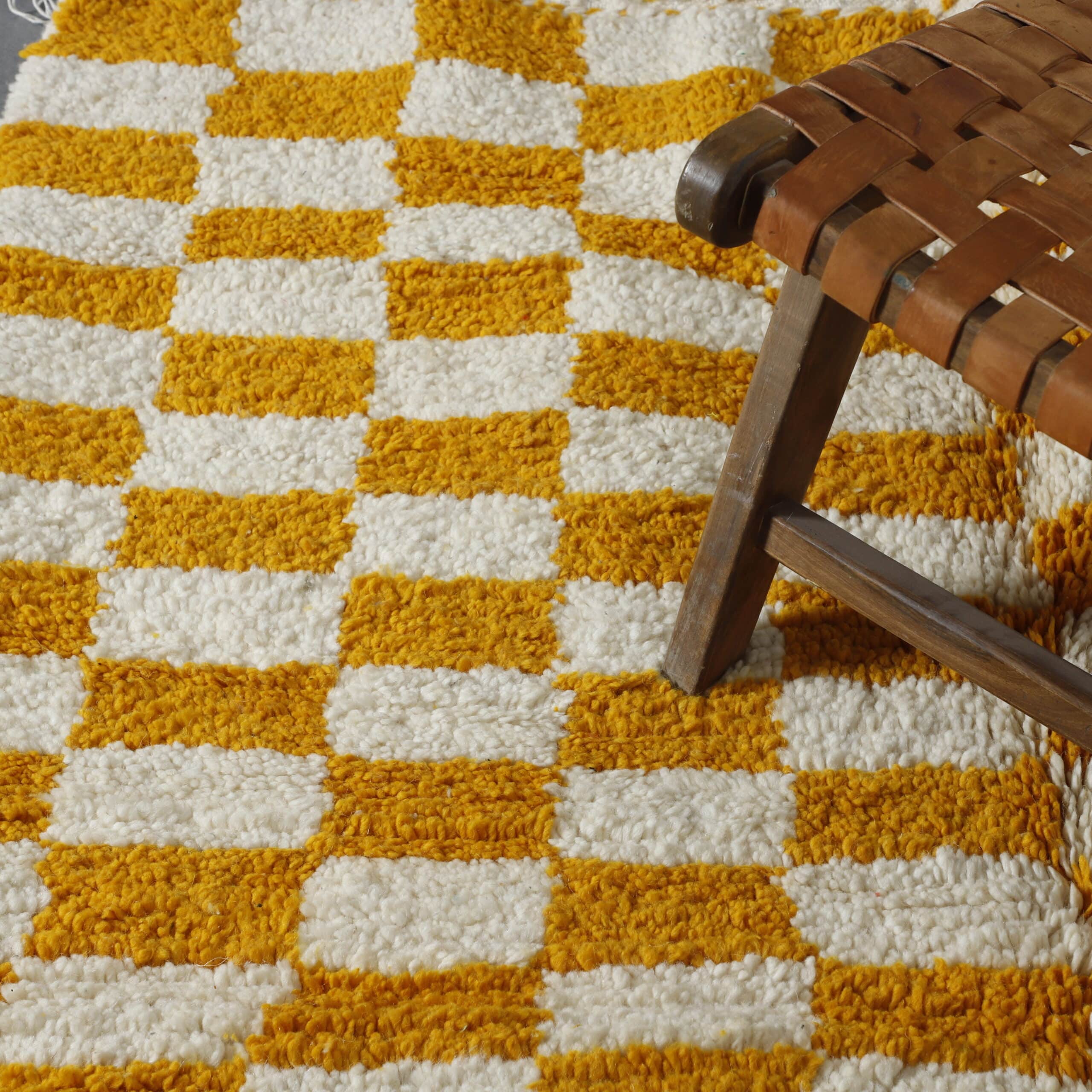
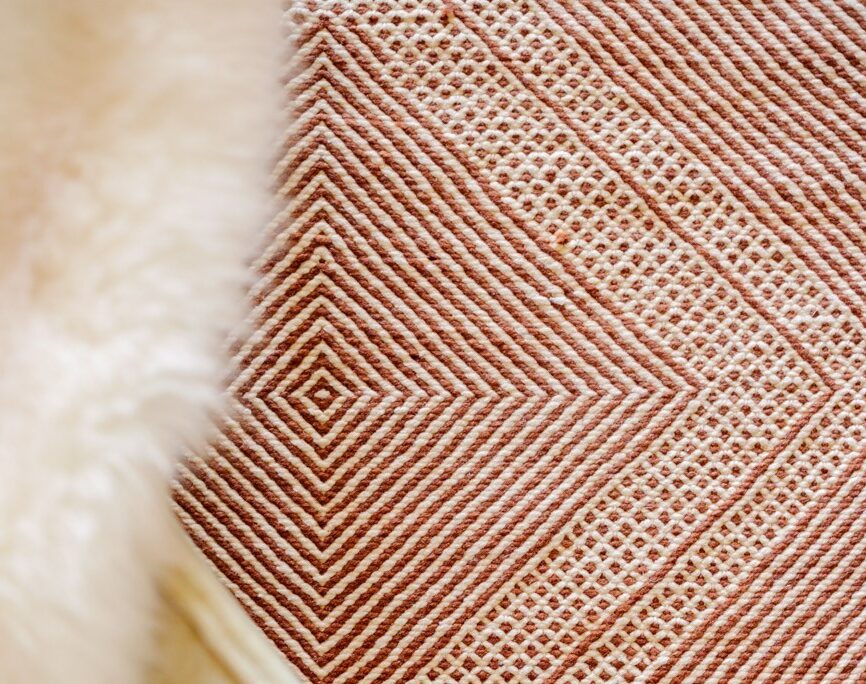
Beni Ourain rugs originate from the Beni Ourain confederation of tribes in the Middle Atlas Mountains of northeastern Morocco. Seventeen separate tribes make up this group, all settled at high altitude above 2,000 meters. The cold-climate sheep they raise produce an unusually dense, soft, cream-colored wool. Beni Ourain weavers historically kept color out entirely — the rugs use only the natural white and dark brown of undyed wool. The geometric motifs they weave are sparse, symbolic, and deliberately spaced across a wide ivory ground. The overall effect is quiet, modern, and surprisingly minimal for a tribal textile.
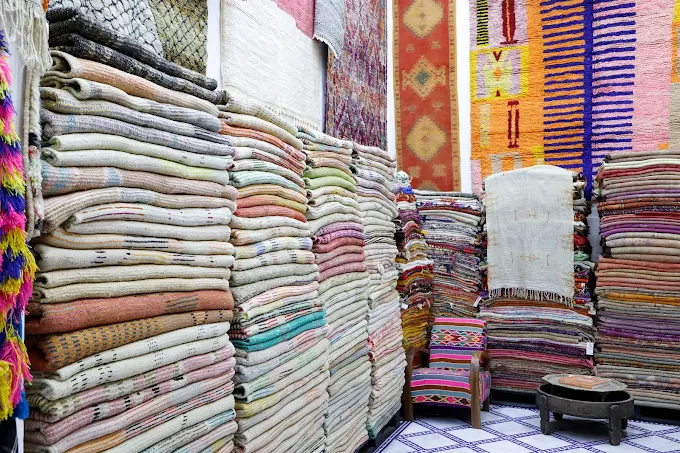
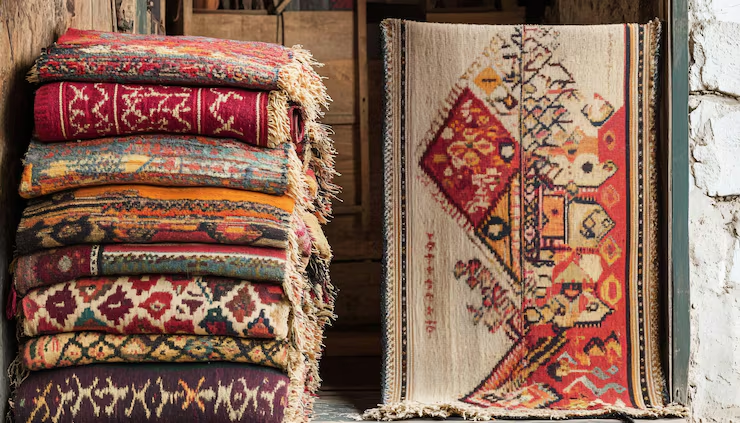
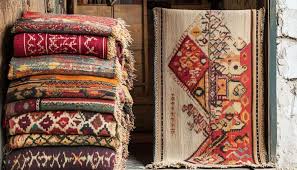
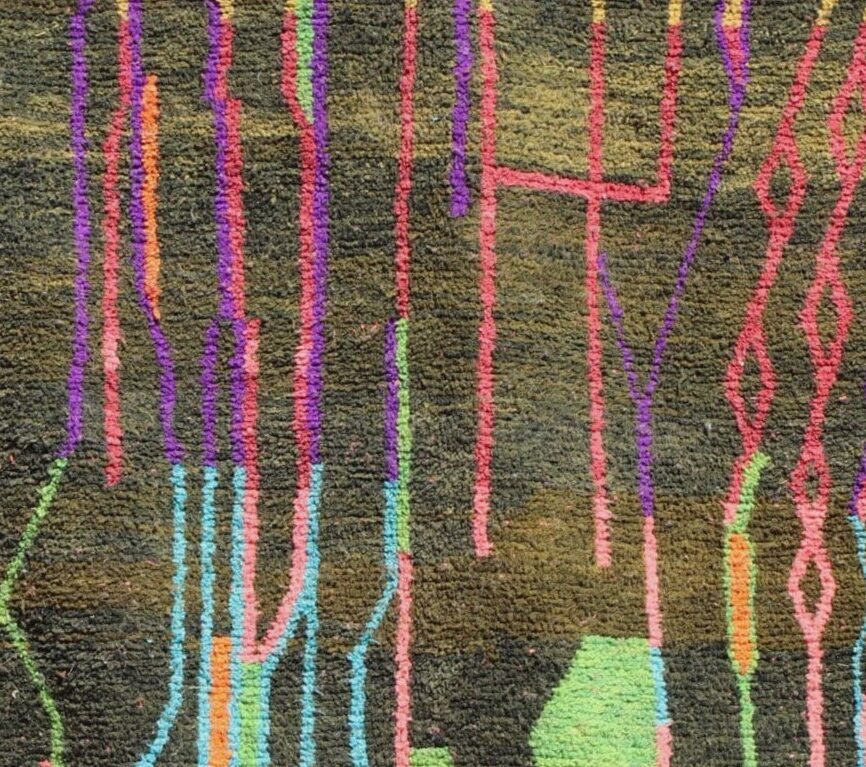
Azilal rugs come from the Azilal province in the central High Atlas Mountains, south of Beni Mellal. Azilal weavers work very differently. They use color freely — faded red, indigo blue, earthy green, mustard yellow, soft pink — and they approach the surface as a personal creative space rather than a cultural code. Azilal compositions feel freer than other Moroccan weaving styles. Symbols appear where the weaver places them. Lines shift direction. Abstract forms sit alongside recognizable motifs without strict compositional logic. The result reads as expressive, layered, and distinctly artistic.
Same mountain range. Completely different outcomes on the loom.
The Case for Beni Ourain in Modern Interiors
Interior designers reached for Beni Ourain rugs heavily through the 2010s, and with good reason. The style slots into modern, Scandinavian, and minimalist interiors with almost no friction.
The cream and ivory ground reads as neutral from most distances. The dark geometric motifs — diamonds, lozenges, stepped lines — provide visual structure without color commitment. A Beni Ourain rug in a room with white walls, pale wood furniture, and linen upholstery does not compete with anything. It grounds the space without claiming it.
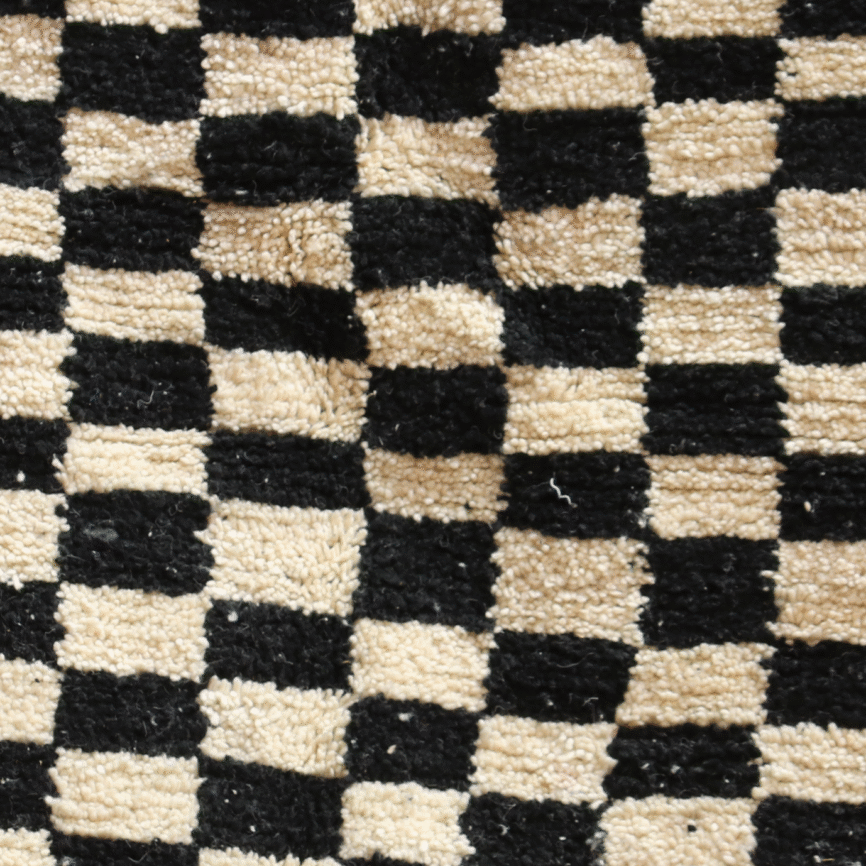
The pile also matters in modern contexts. Beni Ourain sheep produce a notably thick, soft, long-staple wool. The rugs carry a plush depth that reads as luxury even in minimal settings. On a polished concrete floor or light hardwood, the contrast between the hard surface and the soft pile creates a sensory contrast that flat-woven or thin-pile rugs do not achieve.
Neutral palette. Sparse geometric pattern. Plush natural pile. These three qualities explain the consistent demand for Beni Ourain rugs in contemporary interior design across Europe, North America, and Australia.
The practical case is strong. A Beni Ourain rug works in a living room, a bedroom, a home office, and a hallway without requiring the surrounding design to adjust. That adaptability has real commercial value for buyers who move frequently, rent, or work across multiple interior styles within the same property.
The Case for Azilal in Modern Interiors
Azilal rugs take longer to place well, but the payoff is higher when they land correctly.
The color work is the main variable. An Azilal rug in faded red, blush pink, and soft indigo against a white ground does not disappear into the background of a room the way Beni Ourain does. It asserts itself. It claims visual territory. That quality is exactly what some modern interiors need — a genuine focal point with cultural weight and artistic individuality rather than a decorative layer that blends in.
Eclectic interiors respond strongly to Azilal rugs. Spaces that layer textures, mix furniture periods, combine handmade objects with modern pieces — these are the settings where an Azilal rug feels at home. The freeform symbolic composition on an Azilal surface reads as coherent with creative, collected spaces in a way that the more restrained Beni Ourain geometry does not always achieve.
Azilal rugs also carry something that interior designers increasingly value: genuine singularity. Each Azilal rug reflects its maker’s individual compositional decisions in a way that no mass-produced alternative replicates. The symbols on the surface are personal — drawn from the weaver’s cultural memory, emotional state, and visual instincts at the time of production. Two Azilal rugs from the same region and the same approximate period look nothing alike. That level of individuality matters to buyers who prioritize authenticity in their interior objects.
Bohemian, wabi-sabi, modern eclectic, artist studio, and globally influenced interiors all absorb Azilal rugs naturally. The key condition: the surrounding space needs enough visual openness to give the rug room to breathe. An Azilal rug in a room already loaded with pattern and competing color will produce noise rather than character.
Color Palette: The Deciding Factor for Most Buyers
Strip away the heritage arguments and the craft comparisons, and most modern interior buyers make this choice based on one thing: how much color the rug introduces into the space.
Beni Ourain introduces almost none. The ivory ground and dark brown geometric motifs read as warm neutral across the full range of room lighting conditions. Morning light. Afternoon sun. Evening lamp warmth. The rug looks slightly different in each condition but never creates a color conflict with the walls, furniture, or textiles around it.
Azilal introduces a specific color story that the rest of the room needs to accommodate. Not absorb — accommodate. A faded red and pink Azilal rug does not disappear behind a grey sofa. The rug leads the room’s color conversation. Buyers need to decide whether they want the rug in that position before committing.
For rooms already anchored by a strong sofa color, bold wall paint, or dense artwork, Beni Ourain provides relief. For rooms built around neutral furniture and walls waiting for a point of focus, Azilal provides exactly that.
Texture and Pile: What Each Style Brings Underfoot
Both rugs use Moroccan wool, but the fiber properties and construction produce very different surface qualities.
Beni Ourain pile runs thick and long. The high-altitude wool carries natural lanolin that keeps the fibers soft and supple over decades. A genuine Beni Ourain rug feels substantial underfoot — not stiff, not flat, but genuinely plush. That quality makes the rug as much a sensory experience as a visual one. Bare feet in winter. Children playing on the floor. A reading chair corner where the rug extends beneath both the chair and the surrounding floor space. Beni Ourain pile performs well in all of these contexts.
Azilal pile varies more widely between individual rugs. Some Azilal weavers produce a medium-depth pile with firm body. Others work with a looser, lighter structure that shows more movement when the rug is walked on. The color work often uses multiple wool types within the same rug — naturally colored wool for the ground and dyed wool for the pattern areas — which creates surface variation between zones. That variation adds visual interest but means Azilal pile is less predictable as a tactile experience than Beni Ourain.
For buyers who prioritize underfoot comfort and consistent pile quality, Beni Ourain holds the stronger position. For buyers who want surface variation and visual texture complexity, Azilal delivers more.
Which Interior Styles Convert Best with Each Rug
The conversion question — which rug actually improves a modern home rather than just occupying floor space — comes down to style fit.
Beni Ourain converts best in:
- Minimalist interiors with white or pale wall tones and clean furniture lines
- Scandinavian-influenced spaces using natural wood, linen, and restrained color
- Modern organic rooms combining raw stone, plaster, and natural fiber materials
- Bedroom settings where calm and softness are the primary design intention
- Home offices where visual distraction needs to stay low
Azilal converts best in:
- Bohemian and eclectic spaces that layer textiles, furniture periods, and cultural references
- Artist studios and creative home environments where individuality is the design intention
- Living rooms with neutral furniture waiting for a defined focal point
- Global-influenced interiors that draw from multiple craft traditions
- Wabi-sabi and imperfect-beauty design approaches where variation is a feature
Neither rug converts poorly in a well-considered space. The conversion failure happens when buyers force the wrong style into the wrong context — a dense Azilal composition in an already saturated room, or a Beni Ourain rug in a space so neutral that nothing in the room gives the eye anywhere to rest.
Size and Placement: How Each Style Functions on the Floor
Both rugs come in a wide size range, but their design logic suggests different placement strategies.
Beni Ourain rugs reward large formats. The sparse geometric composition on a wide ivory ground reads best when the rug covers substantial floor area — under a full sofa grouping, centered beneath a dining table, or anchoring a large bedroom. Small Beni Ourain pieces lose visual impact because the spacing between motifs needs room to establish its rhythm.
Azilal rugs perform across a wider size range. A medium Azilal rug in a reading corner or under a small table carries as much character as a large one, because the compositional density of Azilal weaving concentrates visual interest across the full surface rather than relying on scale to create presence. Small Azilal pieces work as accent rugs in a way that small Beni Ourain pieces rarely do.
Authenticity and Sourcing: What to Verify Before Buying
Both styles attract reproduction products. The market for Moroccan-inspired rugs produced outside Morocco, machine-made to approximate the hand-woven look, is substantial. Knowing what distinguishes authentic pieces from reproductions protects buyers from paying premium prices for inferior products.
Authentic Beni Ourain rugs use undyed wool in both the ivory ground and the dark geometric motifs. Any Beni Ourain-style rug using synthetic white or dyed cream as the base is not authentic. The pile should feel dense and lanolin-rich, not dry or uniform in texture. Genuine pieces carry slight irregularities in motif spacing and pile depth across the surface — these are features, not defects.
Authentic Azilal rugs show individual compositional decisions that no reproduction captures accurately. The color placement is deliberate but not systematic. Motif repetition across the surface is rare. Each zone of the rug reflects the weaver’s choices at that moment of production. Machine-made Azilal reproductions reveal themselves through over-regular pattern repetition and synthetic color saturation that lacks the depth of aged natural dye work.
Sourcing directly from Moroccan artisans or from retailers who provide provenance documentation and work directly with Moroccan suppliers gives buyers the strongest protection against reproductions. At Musmusrugs, every rug ships directly from Morocco, sourced from the artisan communities who produce the originals.
The Direct Answer: Which Converts Better
Beni Ourain converts more reliably across more interior types. The neutral palette, consistent pile quality, and minimal geometric design make it the lower-risk choice for buyers who want guaranteed visual success in a modern home without restyling the surrounding space.
Azilal converts more powerfully in the right space. A well-placed Azilal rug in a room built to receive it creates a stronger design statement than any Beni Ourain piece — more individual, more culturally specific, more visually alive.
The practical framework: buy Beni Ourain for rooms where the rug needs to disappear gracefully into a considered neutral interior. Buy Azilal for rooms where the rug needs to lead.
Both deserve a place in any serious collection of handmade Moroccan textiles. Explore the full range at Musmusrugs and find the right style for your specific space.
Blog
Get fresh home inspiration and helpful tips from our interior designers