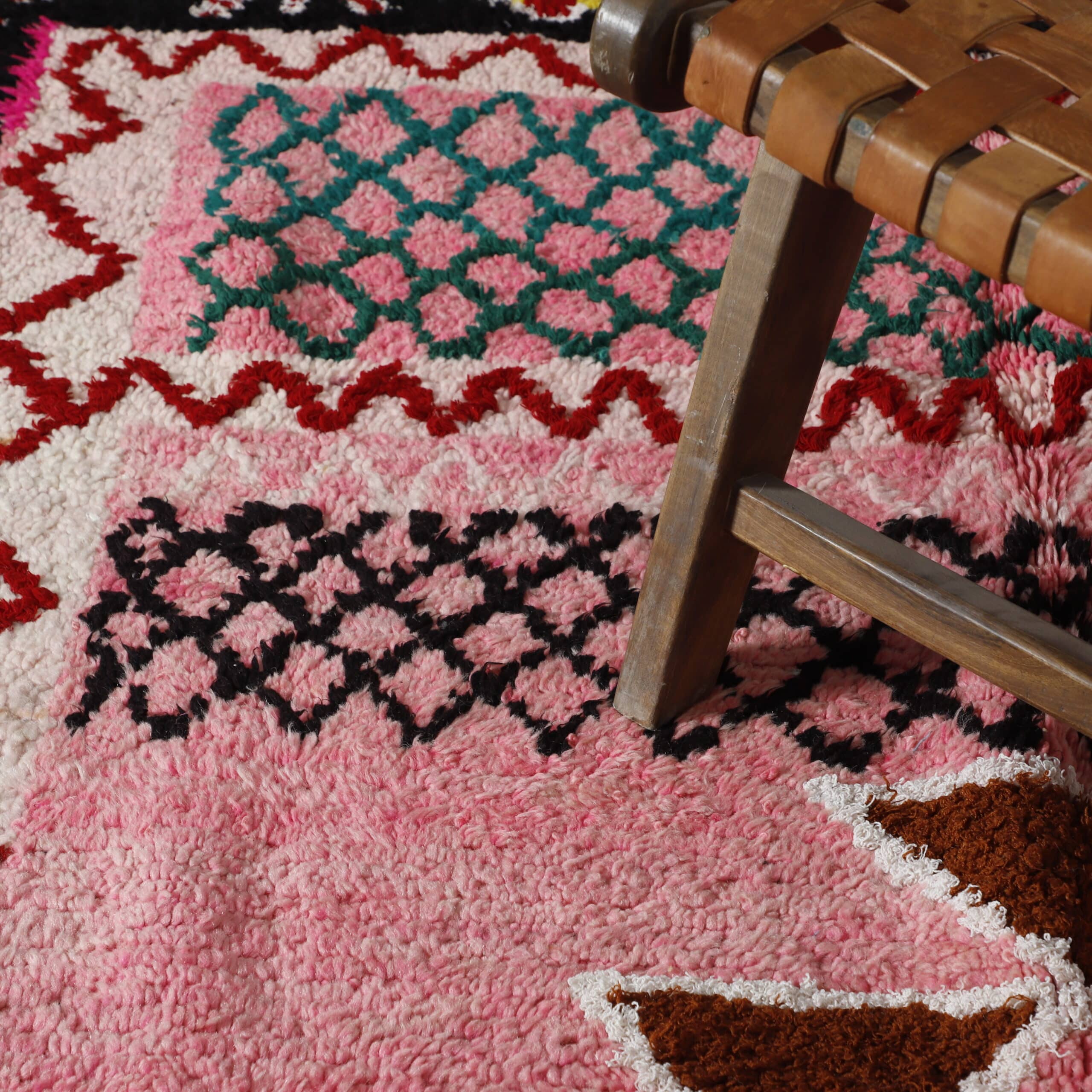
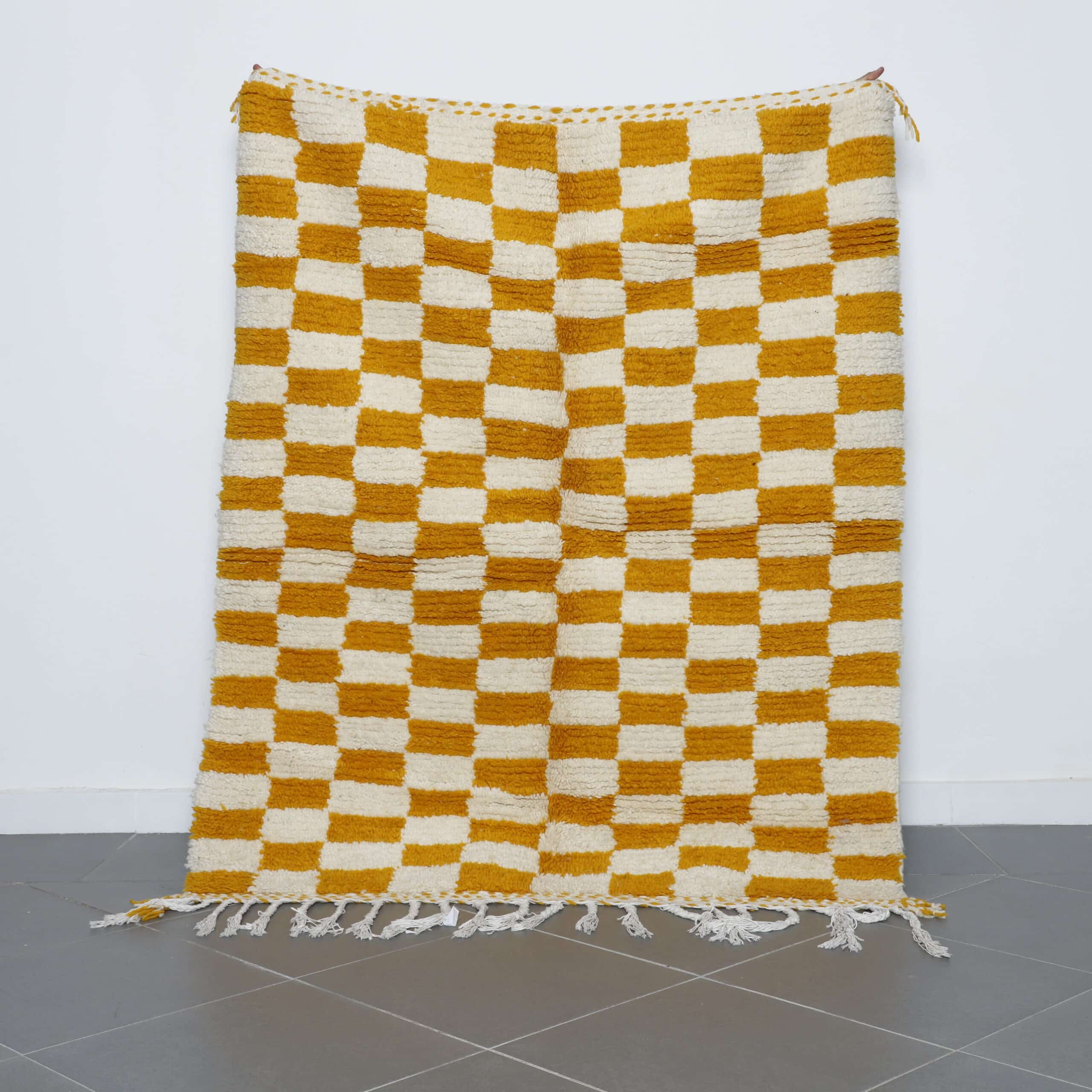
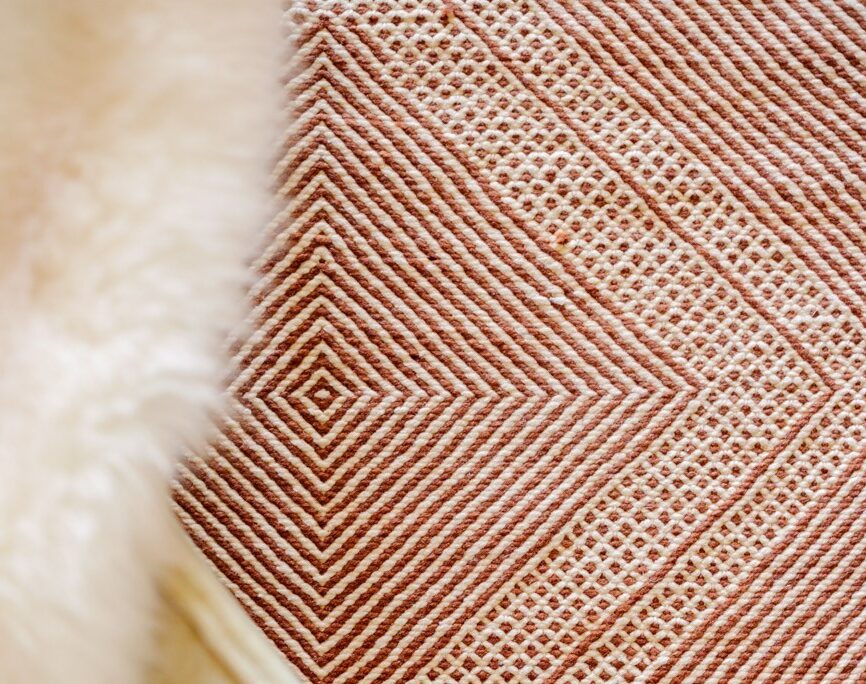
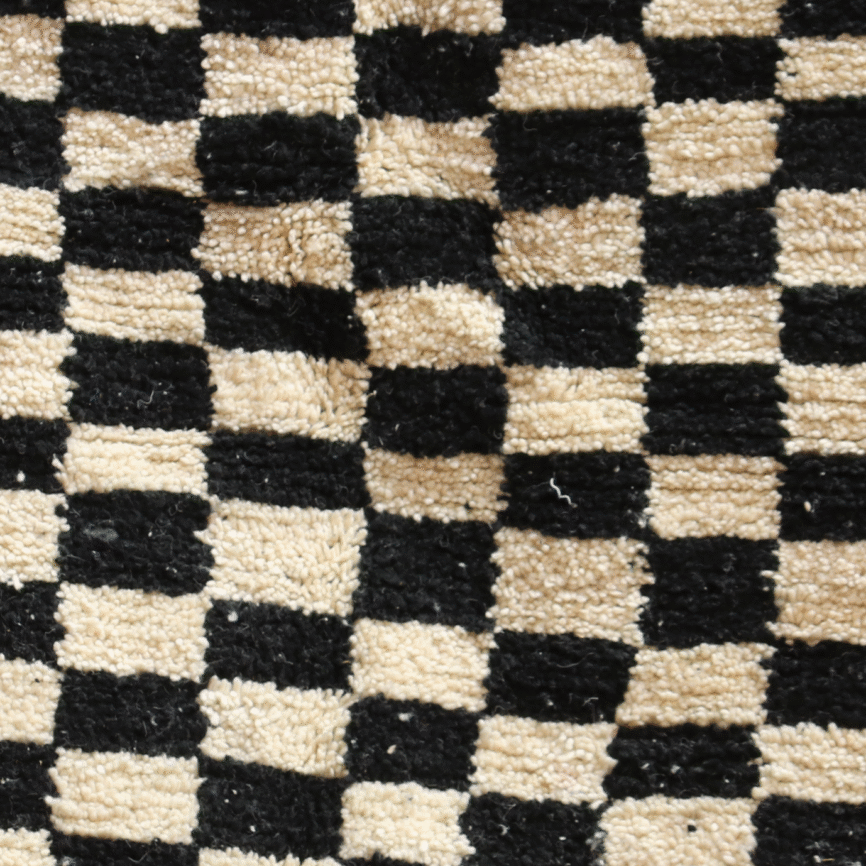
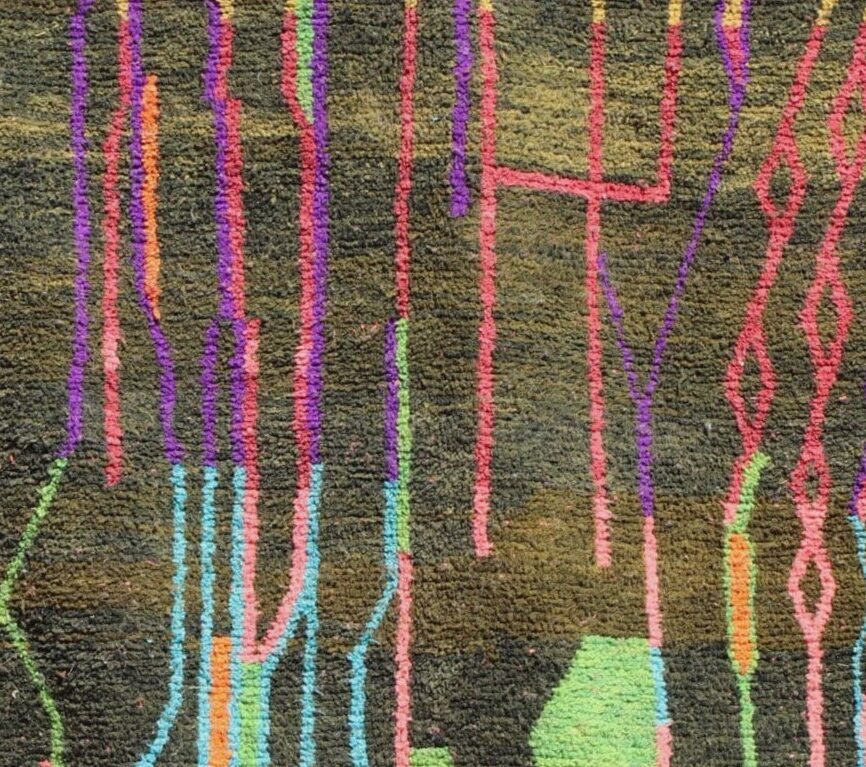
Understanding the materials helps buyers choose the right rug. Material choice affects texture, colour, strength, and care needs. Boho neutral homes often need rugs that feel natural and peaceful. Moroccan rugs meet this need with honest, straightforward materials. This guide explains the primary materials used in traditional Moroccan rugs. The focus remains on boho-neutral styles that suit modern homes.
Wool as the Main Material in Moroccan Rugs
Wool stands as the most common material in Moroccan rugs. Local sheep provide this wool in many mountain areas. Artisans wash, spin, and hand-weave the yarn. Wool feels soft underfoot and helps retain warmth in a room. The fibres trap air, which helps with comfort in cold and warm seasons. Wool also resists dirt better than many other fibres.
Boho neutral rugs often use undyed or lightly dyed wool. Natural wool colours include cream, ivory, beige, brown, and soft grey. These tones blend well with wood furniture and neutral walls. Wool lasts for many years with proper care. The fibres bend instead of breaking. This strength makes wool rugs ideal for living rooms and bedrooms.
Natural Wool Colours and Their Beauty
Many Moroccan rugs retain their natural wool colour. Sheep produce wool in different shades based on breed and region. Artisans sort the wool by colour before weaving. Undyed wool creates soft patterns without strong contrast. These rugs feel calm and balanced. Boho homes often prefer this gentle look. Natural wool colours also age well. Sunlight does not fade them fast. The rug keeps its beauty for a long time. This natural look supports eco-friendly living. No chemicals come into contact with the wool during colouring.
Cotton Used for Rug Foundations
Cotton plays a key role in the structure of Moroccan rugs. Artisans often use cotton for the base or backing. This base holds the wool knots in place.
Cotton feels firm and smooth. It keeps the rug flat on the floor. Many rugs use cotton warp threads to add strength. Cotton also helps control weight. Wool rugs can feel heavy. Cotton reduces bulk while keeping durability. Boho neutral rugs with cotton bases stay flexible. The rug folds easily for cleaning or moving.
Camel Hair for Soft and Neutral Rugs
Camel hair appears in some traditional Moroccan rugs. This fibre comes from camels raised in desert regions. Artisans collect the hair during natural shedding seasons. Camel hair feels very soft and light. The fibre shows warm brown and sandy tones. These colours suit boho-neutral homes perfectly. Rugs made with camel hair cost more due to the limited supply. Many weavers mix camel hair with wool to balance price and texture. Camel hair also resists moisture well. This feature helps rugs stay comfortable in dry climates.
Goat Hair for Strength and Texture
Goat hair appears in tribal Moroccan rugs. This material feels coarse and strong. Artisans use goat hair for edges, borders, or flat-woven rugs. Dark goat hair adds contrast to light wool. Many neutral rugs include small black or dark brown lines from goat hair. This fibre improves durability. Rugs with goat hair handle heavy foot traffic better. Entryways and hallways benefit from this strength. Goat hair also helps keep the rug’s shape. The fibres do not stretch easily.
Natural Dyes for Soft Neutral Colours
Traditional Moroccan rugs use natural dyes from plants, minerals, and insects. These dyes create soft and earthy tones. Familiar dye sources include:
- Henna for warm orange and rust shades
- Indigo for soft blue and grey
- Walnut shells for brown tones
- Pomegranate peel for light yellow
Boho-neutral rugs often limit the use of dyes. Artisans apply dyes lightly or not at all. This choice keeps colours calm and balanced. Natural dyes age slowly. Colours fade gently and evenly. This ageing adds charm rather than damage.
Undyed Rugs for Minimal Boho Style
Many boho-neutral homes prefer rugs without dyes. These rugs show only pure wool colour. Undyed rugs feel clean and simple. Patterns rely on texture rather than colour contrast. Raised knots and flat sections add visual interest. This style works well in modern and rustic interiors. Light walls and wooden floors highlight the rug texture. Undyed Moroccan rugs also support sustainable living. The weaving process avoids the use of chemicals and waste.
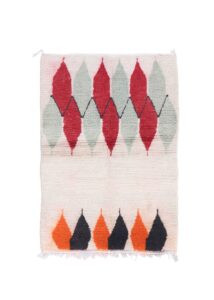
Handwoven Construction and Its Role
Materials alone do not define a Moroccan rug. Hand weaving gives life to the fibres. Artisans use wooden looms and traditional knotting methods. Each knot is formed by hand. This process takes weeks or months.
Handwoven rugs show slight variation. No two rugs look the same. These minor differences add character. Boho interiors value this handmade feel. Perfection feels less important than warmth and soul.
Regional Differences in Materials
Different Moroccan regions favour different materials. Beni Ourain rugs are made from thick wool from mountain sheep. These rugs feature cream backgrounds and dark lines. Azilal rugs mix wool and cotton. Bright accents appear less in neutral designs. Kilim rugs use wool and goat hair in flat weaves. These rugs feel lighter and thinner. Knowing the region helps buyers understand material quality and texture.
Why These Materials Fit Boho Neutral Homes
Boho neutral design values comfort, nature, and balance. Moroccan rug materials support these ideas. Natural fibres feel warm and honest. Soft colours reduce visual noise. Handmade textures add depth without intense colour. These rugs blend with linen sofas, wooden tables, and clay decor. The room feels calm and welcoming. Natural materials also support health. Wool resists dust mites and improves indoor air quality.
Care Tips Based on Material
Material choice affects care needs. Wool rugs need gentle vacuuming. Strong brushes can damage fibres. Cotton bases handle regular use well. Avoid soaking the rug. Camel-hair rugs require careful spot cleaning. Too much water can weaken fibres. Goat hair edges benefit from light shaking outdoors. Proper care keeps the rug beautiful for many years.
Final Thoughts on Moroccan Rug Materials
Moroccan rugs use simple and natural materials with deep meaning. Wool, cotton, camel hair, goat hair, and natural dyes work together to create beauty and strength. Boho neutral homes benefit from these materials. Calm colours, soft textures, and handmade charm fit this style well.
A clear understanding of materials helps buyers make informed choices. The right rug brings comfort, culture, and peace into any space.
Frequently Asked Questions
What material do most Moroccan rugs use?
Most Moroccan rugs use wool. Artisans collect wool from local sheep. Wool feels soft and warm. It lasts for many years and is suitable for daily use.
Do Moroccan rugs use synthetic materials?
Traditional Moroccan rugs are made only from natural materials. Wool and cotton appear most often. Some rugs are made of camel or goat hair. Synthetic fibres do not align with traditional weaving methods.
Why do boho neutral homes prefer wool rugs?
Wool shows soft and calm colours. Natural wool shades include cream, beige, and light brown. These colours match boho-neutral interiors well. Wool also adds comfort and warmth.
Are Moroccan rugs dyed with chemicals?
Many Moroccan rugs use natural dyes. Artisans get colours from plants and minerals. Some rugs stay undyed. Natural dyes create soft and earthy tones.
How long do Moroccan rugs last?
Moroccan rugs last many years with proper care. Wool fibres stay strong. Handwoven construction improves durability. Regular cleaning helps keep the carpet in good shape.